Firearms Training: Next Steps After Your Permit
Firearms Training, New Shooters, Safety, Permits
So You Got Your Permit – Now What?
Your permit just arrived, and that little card feels like a big milestone. First off, congratulations. Whether it’s your concealed carry permit or another firearms-related license, you’ve taken a serious step in your personal safety journey. Now comes the important part: learning how to carry, handle, and live with a firearm responsibly every single day.
Step One: Celebrate—Then Ground Yourself in Responsibility
It’s perfectly okay to feel proud. Getting your permit usually means you passed a background check, studied the law, and maybe completed a basic class. But a permit isn’t a finish line; it’s the starting line. From here on, your choices matter more than ever, because you’ve accepted the responsibility of having a firearm in your life.
At Carolina Tactical Training, we like to remind new permit holders that mindset beats hardware. The best gun, holster, or ammo won’t make up for poor judgment, lack of practice, or a shaky understanding of the law. Your first task after getting your permit is to commit to being a lifelong student of safety and skill.
Revisit the Fundamentals of Firearm Safety
You may have heard the basic safety rules before, but now that you’re permitted to carry, they need to move from “things I memorized” to “habits I live by.” Every time you handle a firearm, remember:
Treat every firearm as if it’s loaded. Even when you’re “sure” it’s not, check anyway.
Never point at anything you’re not willing to destroy. Muzzle discipline is non‑negotiable.
Keep your finger off the trigger until your sights are on target and you’ve made the decision to shoot.
Know your target and what’s beyond it. You own every round that leaves your barrel.
💡 Friendly Reminder: Say the four rules out loud every time you gear up. It may feel silly, but it builds the kind of automatic habits you’ll rely on under stress.
Dial In Your Gear: Holster, Storage, and Everyday Carry
With a permit in hand, many people rush out to buy the “coolest” handgun or the trendiest holster they see online. Instead, focus on fit, comfort, and safety. A good concealed carry setup should be secure, cover the trigger completely, and fit your lifestyle and clothing choices.
Equally important is how you store your firearm when it’s not on your body. If you have kids, roommates, or frequent visitors, a quick‑access safe is a smart investment. Your goal is simple: your gun should be readily available to you and effectively inaccessible to everyone else.
Learn the Law Beyond the Test Questions
Passing a written test doesn’t mean you fully understand the legal realities of carrying a firearm. Take time to go deeper into your state’s laws: where you can and can’t carry, how “no guns” signs are treated, what constitutes brandishing, and when you are legally justified in using deadly force. These details can change from one county or state to the next, and “I didn’t know” is not a defense.
Many students at Carolina Tactical Training are surprised by how quickly a simple misunderstanding can turn into a serious legal problem. That’s why we weave real‑world scenarios and plain‑English legal explanations into our classes, so you’re not just armed—you’re informed.
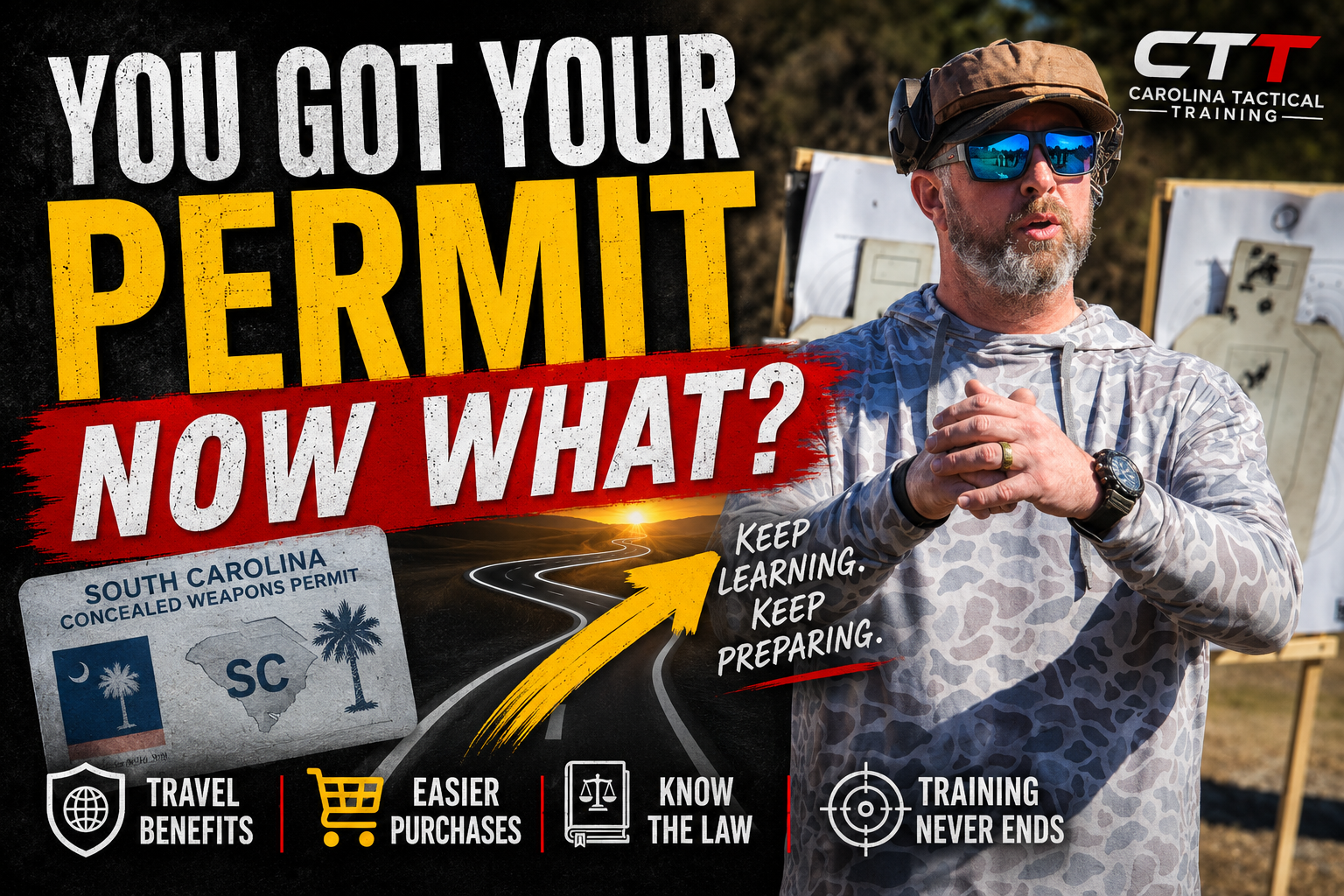
Focused coaching helps new permit holders turn basic skills into calm confidence.
Build Real Skill: Dry Practice and Live-Fire Training
Owning a piano doesn’t make you a musician, and owning a handgun doesn’t make you prepared. After you get your permit, plan out a simple training routine. At home, with an unloaded firearm and no ammunition in the room, you can safely practice drawing from your holster, building a solid grip, and presenting to the target. This kind of dry practice builds muscle memory without using a single round.
Then, schedule regular range time. Don’t just punch holes in paper—train with a purpose. Work on smooth draws, controlled pairs, reloads, and shooting from realistic distances. A structured class with experienced instructors, like the courses we offer at Carolina Tactical Training, can save you months of trial and error and help you avoid bad habits before they stick.
📌 Key Takeaway: Your permit gives you the option to carry. Training gives you the ability to carry responsibly.
Prepare for the “What Ifs”
Part of being a responsible permit holder is mentally rehearsing situations you hope never happen. What if someone notices you printing and asks, “Are you carrying?” What if your gun accidentally becomes exposed in public? What if you’re forced to draw—but not shoot? Thinking through these “what ifs” ahead of time helps you respond calmly instead of panicking.
In our classes, we walk students through verbal skills, de‑escalation concepts, and post‑incident steps, including calling 911 and interacting with law enforcement. The more you understand now, the less you’ll have to figure out in the heat of the moment.
So You Got Your Permit—Now Make It Mean Something
That plastic card in your wallet is more than permission; it’s a promise. It says you’re willing to take your safety—and the safety of those around you—seriously. The next steps are simple but powerful: commit to safety, learn the law, choose your gear wisely, and train with people who know how to guide you without talking down to you.
If you’re ready to turn your new permit into real‑world confidence, Carolina Tactical Training is here to help. Our professional, experienced instructors work with both brand‑new and seasoned shooters in a friendly, structured environment. Book a class, bring your questions, and let’s turn that permit into the skills and mindset you can rely on when it matters most.