New Blog You Can’t Buy Proficiency—But the Right Equipment Can Make a Difference
You Can’t Buy Proficiency—But the Right Equipment Can Make a Difference
One of the things I regularly tell students at Carolina Tactical Training is this:
You cannot buy proficiency.
Buying a more expensive handgun, adding an optic, purchasing a premium holster, or carrying the latest piece of equipment does not automatically make someone more capable of defending themselves.
Skill still matters.
Training still matters.
Practice still matters.
But something happened during a recent class that reminded me there is another side to that conversation:
While equipment cannot replace skill, the wrong equipment can absolutely make developing and applying that skill more difficult.
A Student Who Was Struggling
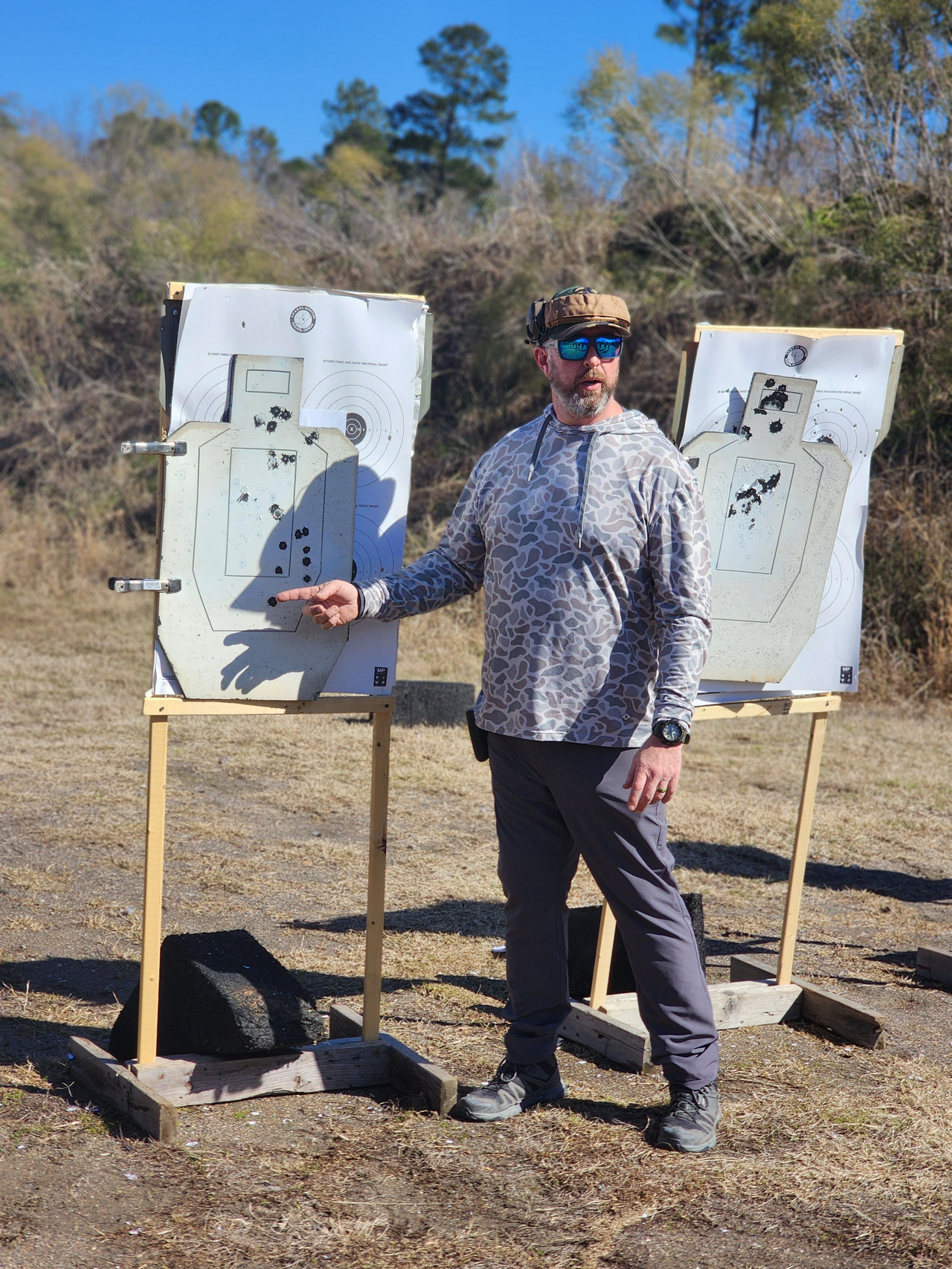
During a class this weekend, I had a student shooting a Smith & Wesson SD9-series pistol with iron sights.
She was struggling.
We worked on her fundamentals. I made some adjustments to her stance and grip, and her performance began improving. She was doing reasonably well during portions of the class, but when it came time for the shooting qualification, she struggled to put everything together.
Her score was:
11 out of 25.
She didn't meet the required standard.
At that point, I could have simply told her that she needed more practice. And technically, that would have been true.
But as an instructor, my job isn't simply to identify failure. My job is to figure outwhythe student is struggling.
Was it grip?
Stance?
Trigger control?
Sight picture?
Confidence?
Or was the equipment creating an additional obstacle?
In this case, I believed the handgun itself was contributing to the problem. The trigger was difficult for her to manage consistently, the gun wasn't an especially good fit for her hands, and the iron sights added another challenge.
So we tried something different.
Changing the Platform
I handed her my SIG P365 equipped with a pistol-mounted optic.
Before having her shoot again, we worked with the new platform. I showed her how to establish her stance, build a consistent grip and appropriately use the optic.
Then she shot the qualification again.
The result?
23 out of 25.
Same student.
Same instructor.
Same basic shooting fundamentals.
But a handgun that fit her better and a sighting system she was able to use more effectively.
She went from44% to 92%.
That's a significant improvement, and it happened almost immediately.
Did the Gun Make Her a Better Shooter?
This is where we have to be careful about the lesson we take from this experience.
I don't believe the SIG magically made her proficient.
And I certainly don't believe putting a red dot on someone's handgun suddenly makes them prepared to carry it for personal protection.
What happened was more nuanced.
We had already worked on her stance and grip. She had received instruction and coaching. Once we put those fundamentals together with equipment that worked better for her, she was able to demonstrate considerably more of her actual capability.
That's an important distinction.
Good equipment didn't replace training. It allowed the training to work more effectively.
The fundamentals of handgun shooting still include things such as grip, stance, sighting and trigger manipulation, and those skills require ongoing practice to develop and maintain.
Likewise, pistol-mounted optics can provide real advantages, but they still require the shooter to learn proper presentation, visual processing and consistent technique. Simply installing an optic isn't the same thing as learning to use one.
There Is No Trophy for Carrying Equipment That Works Against You
Sometimes people become emotionally attached to their handgun.
"It's what I already own."
"It's what someone recommended."
"It's what my husband bought me."
"It was inexpensive."
"It's what I've always carried."
None of those answers necessarily mean the handgun is the right choice for that individual.
Your everyday-carry handgun is a tool.
The question shouldn't be whether a particular manufacturer is popular or whether someone else shoots that model well.
The question should be:
Can YOU operate it safely, reliably, accurately and consistently?
Hand size matters.
Grip geometry matters.
Trigger characteristics matter.
Recoil characteristics matter.
Sight visibility matters.
Your ability to manipulate the controls matters.
And for some shooters, a pistol-mounted optic may make a substantial difference in how effectively they can visually process their sights and target.
The best handgun for someone else isn't necessarily the best handgun for you.
But Don't Confuse Better Equipment With Better Training
There is another mistake we have to avoid.
After experiencing an improvement like this, it would be easy for someone to think:
"I just need a better gun and an optic."
That's not the lesson.
A red dot doesn't correct a poor grip.
It doesn't correct poor trigger manipulation.
It doesn't teach you how to safely draw from concealment.
It doesn't teach you judgment.
It doesn't teach you when you legally can or cannot use force.
And it doesn't create competence under pressure.
In fact, an optic can expose inconsistencies in grip and presentation that the shooter must learn to correct. Developing a repeatable presentation and learning to immediately acquire and appropriately process the dot takes practice.
Equipment can enhance capability. Training develops capability.
You need both.
Qualification Is the Beginning, Not the Finish Line
This may be the most important lesson.
Passing a shooting qualification does not mean someone has completed their firearms education.
It means they demonstrated a particular standard on a particular day under a particular set of conditions.
Everyday carry demands considerably more.
A responsible armed citizen should continue developing safe gun handling, marksmanship, firearm manipulation, drawing from concealment where lawful and appropriate, decision-making, legal knowledge, medical preparedness and the ability to perform skills consistently.
Those abilities aren't developed during a single class.
They are developed through continuing education, deliberate practice and quality training.
Proficiency is perishable. Shooting, like other psychomotor skills, requires ongoing training and practice to maintain and improve performance.
That's why I don't want students walking away from a permit or introductory class thinking:
"I'm trained."
I'd rather they walk away thinking:
"My training has started."
Train First. Then Let Equipment Support Your Training.
My experience with this student didn't change my opinion that you can't buy proficiency.
It refined it.
You cannot buy proficiency—but you can buy equipment that better supports your ability to become proficient.
There's an important difference.
Before spending hundreds or thousands of dollars chasing the newest handgun, optic or accessory, get quality instruction.
Learn the fundamentals.
Have a knowledgeable instructor evaluate how you shoot.
Try different platforms when possible.
Determine what actually fits your hands and allows you to operate the firearm effectively.
Then invest in reliable, quality equipment that supports the skills you're developing.
And once you find that combination?
Keep training.
Because the goal of everyday carry isn't owning the best equipment.
The goal is becoming the kind of person who can safely, responsibly and competently use the equipment you carry.
AtCarolina Tactical Training, that's why we view firearms education as a pathway rather than a single class.
Your permit class shouldn't be graduation day.
It should be Day One.
Plan with Purpose. Prepare with Confidence. Perform with Excellence.
Brad Amick
Owner/Training Counselor- Carolina Tactical Training